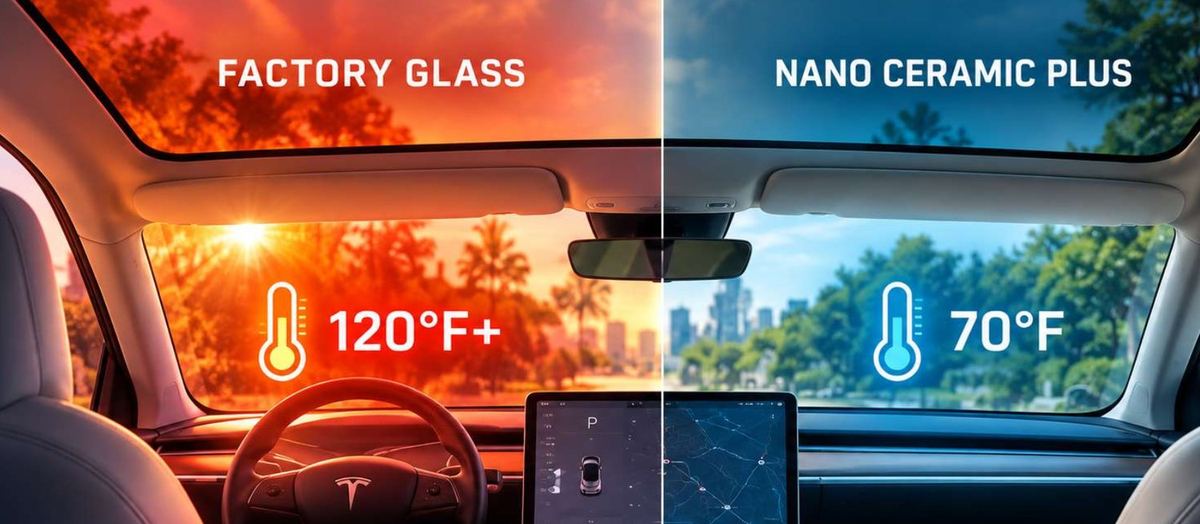
Factory glass on the left, Nano Ceramic Plus on the right. Windshield film and windshield tint do different jobs — film stops the damage, ceramic tint stops the heat. Plenty of cars get both.
A clear film over intact glass that takes the hit from winter sand, salt and gravel. On a modern car with cameras behind the glass, one avoided replacement pays for it several times over.
Windshield film is preventive, not a repair. It goes onto intact glass. If your windshield is already chipped or cracked, that gets repaired or replaced first — then the film goes on the new glass. We do both, so it can be one visit.
Protects against chips, cracks and pitting from road debris — including the sand and salt Long Island roads are covered in every winter.
Optically clear, with minimal distortion, haze or glare around oncoming headlights.
Designed to leave factory equipment and driver-assist sensors undisturbed, which avoids costly recalibration.
Reduces sun damage and interior fading through the biggest piece of glass on the car.
Adds gloss and helps water bead and shed, so wipers work less.
Same warranty standard we hold the rest of our window film to.
A windshield used to be glass. On most cars built in the last several years it's glass plus a camera array, rain sensors and a heating element — and replacing it means recalibrating the driver-assist system afterwards. That turns a few hundred dollars into well over a thousand.
Film is cheap next to that maths. It also keeps the original factory glass in the car, which is worth something on its own.
Windshield tint is a separate thing and it is priced on our list: Standard from $149, Base Ceramic from $195, Nano Ceramic Black from $200 and Nano Ceramic Plus from $300. Some vehicles run higher, so we confirm every windshield before quoting. A windshield strip or visor is quoted separately.
Windshield protection film is quoted per vehicle — glass size, sensor layout and access all matter. A deposit holds the bay and comes off the final bill.
We handle chip repair, full windshield replacement and ADAS recalibration, and we work with most insurance carriers.
Everything is installed indoors in a climate-controlled bay at our Farmingdale facility.